Happy Spender: Can Spending Well Be a Skill Too?
Over the years, I have had many conversations about money with clients, employees and friends. One thing keeps coming up. Most of us were taught a lot about saving.
Save first. Spend later.
Some of us also learned about investing and retirement. But I cannot remember anyone teaching me how to spend well.
Yet we spend every day. Food, petrol, school fees, our parents, our health. And once in a while, something that just makes us happy.
So I keep asking myself this:
If saving is a skill, and investing is a skill, why do we not treat spending as a skill too?
That question is where Happy Spender comes from. It is one of the ideas I use in my Life-First way of looking at money. In this post, I want to explain what I mean by it.
WHY I CALL IT "HAPPY SPENDER"
When people hear "happy spender", some picture a person who buys whatever they like. Others hear it as another way of saying "treat yourself".
That is not what I mean.
For me, a Happy Spender is someone who knows what makes spending worth it for them. They spend on things that support the life they want, and they stay within what they can afford.
Spend on what matters to you, within what you can afford.
Why "happy"? Because money is a tool for life. If the way we spend never makes our life any better, I think we should stop and ask why.
Why "spender"? Because all of us spend. The real question is whether we are spending on autopilot, or whether we know what our money is doing for us.

These are shoes I could not afford when I was younger. Even after I started working, I did not give myself permission to buy them. Watching my clients find the courage to give themselves permission helped me do the same. I finally bought them, and they are really comfortable. Many weeks later, I still feel grateful every time I wear them.
TWO WAYS SPENDING CAN GO WRONG
When we talk about spending problems, we usually mean one thing. Spending too much.
That is a real problem. Spending on autopilot can take over our cash flow bit by bit. A subscription here, food delivery there. Then an upgrade, because everyone around us seems to be upgrading. None of these is wrong on its own. But when spending becomes a habit we do not think about, there is not much left for the things we say matter most. There is also less of a cushion when life gets hard.
Psychologists have a name for part of this, i.e. hedonic adaptation. In simple terms, we get used to new things quickly. The good feeling from a purchase often fades sooner than we expect. If we keep chasing that feeling with the next purchase, it gets expensive, and it does not satisfy for long.
A client once shared with me how things were for her before we started working together. She felt overwhelmed. She was following trends she saw on Instagram, mostly out of fear of missing out. She found it hard to keep track of her spending, and she felt insecure about money. She also expected a financial adviser to focus on her numbers and tell her to cut out the things she loved.
Over time, our conversations gave her space to ask the questions she had been too afraid to ask. She started asking herself why she spent the way she did. She came to see wealth as living a meaningful life without regrets. From there, she set up a budgeting system that fits her lifestyle and got her savings on track. Keeping track of her spending had once been a struggle. Now she no longer felt the burden of tracking and recording every expense, and she felt liberated by that. By the time she shared her story, she knew where she stood and was no longer anxious about money. She felt at peace, with more mental and emotional energy for the rest of her life.
There is a second problem we talk about much less. Spending too little, out of fear.
I have met people who, on paper, are well prepared. They save every month and have little debt. Yet spending on themselves, or even on a family holiday, makes them feel guilty. Some keep holding back long after they have reached the amount they were saving for.
Saving is a good habit. So is waiting for things. I am not saying otherwise. But when fear is what drives our saving, it can cost us too. We may miss time with people we love. We may also lose the peace of mind the savings were meant to give us in the first place.
Overspending can hurt us. So can holding back out of fear.
Happy Spender asks us to look at both.
THE THREE QUESTIONS
So how do we spend with some thought, without turning every purchase into a big headache?
I come back to three simple questions.
1. Is it affordable?
This one always comes first. Can I pay for this without borrowing more than I can manage? Without falling behind on my commitments? Without eating into the safety net my family depends on?
What is affordable is different for everyone. It depends on our income, our commitments, the people who rely on us and how stable our job is. Something one family can afford may be out of reach for another. There is no shame in that.
2. Is it meaningful?
Does this spending connect with something I care about? It could be my health, my family, learning something new, rest, my faith, helping someone, or just something I really enjoy.
It does not have to be big or serious. A simple dinner with an old friend can mean a lot. An expensive purchase made mainly to keep up with others may not mean much at all.
3. Is it worth the trade-off?
Every ringgit we spend on one thing is a ringgit we cannot use for something else. So what am I giving up? Part of my emergency fund? Some of my retirement savings? Evenings with my family because I need to take on extra work?
Most of the time there is no perfect answer. What matters is that we see the trade-off clearly and choose it ourselves, instead of finding out about it later.
Is it affordable? Is it meaningful? Is it worth the trade-off?
These questions will not give you a formula. What they do is make you stop for a moment before you pay. That moment is often enough to help us decide more clearly.

With my wife in Hokkaido.
WHAT HAPPY SPENDER IS NOT
Happy Spender does not mean spending without limits. It does not mean "guilt free" spending no matter what our situation is. And it is not a promise that any type of spending will make us happy.
It is also not against saving or planning ahead. Feeling secure about the future is part of what makes spending today feel good. If a purchase leaves us worried about next month, it is hard to call it a good use of money, however nice it felt at the till.
And it is not about judging how other people spend. What matters to you may look unnecessary to someone else. The opposite is also true.
My hope is simple. I would like us to know what our money is doing for us, so that our spending and our saving both support the life we want, now and later.
WHEN MONEY IS TIGHT
I need to say something important here.
For many Malaysian families, the choice is not between a holiday and a new phone. It is rent, groceries, school expenses, loan repayments and caring for ageing parents, all from one salary that never seems to stretch far enough.
If that is your situation, I do not want this post to feel like one more thing you are "doing wrong". Changing how we think about money does not fix a low income, a heavy debt or an unstable job.
Still, I think the three questions can help a little, even when there is very little room.
"Is it affordable?" can become: which payments must come first this month?
"Is it meaningful?" can become: with what is left, what helps our family feel a bit steadier, or a bit closer?
"Is it worth the trade-off?" can become: what are we giving up without noticing, and is there help we have not asked for yet?
You do not need a big income to ask these questions. You only need a few honest minutes.
If money worries are affecting your sleep or your health, please do not keep them to yourself. Talk to someone you trust, or to a qualified professional. It can make a real difference.
SPENDING WELL IS PART OF FINANCIAL WELLBEING
When I think about financial wellbeing, I do not only think about how much someone has saved. I also think about whether they can pay their commitments, handle a shock, keep moving towards what they care about and feel reasonably at peace with money along the way.
How we spend affects every one of those.
Some of us save very hard and still feel life is passing us by. Some of us earn well and still feel the money disappears with little to show for it. In both cases, the problem may be less about how much we have and more about how we use it, and how we feel about it.
That is really what Happy Spender is about. We put a lot of thought into saving and investing. I think spending needs the same attention.
So next time you are about to pay for something, big or small, try asking yourself the three questions.
Then maybe one more:
When you look at where your money went last month, how much of it went to the life you actually want?
About Kevin
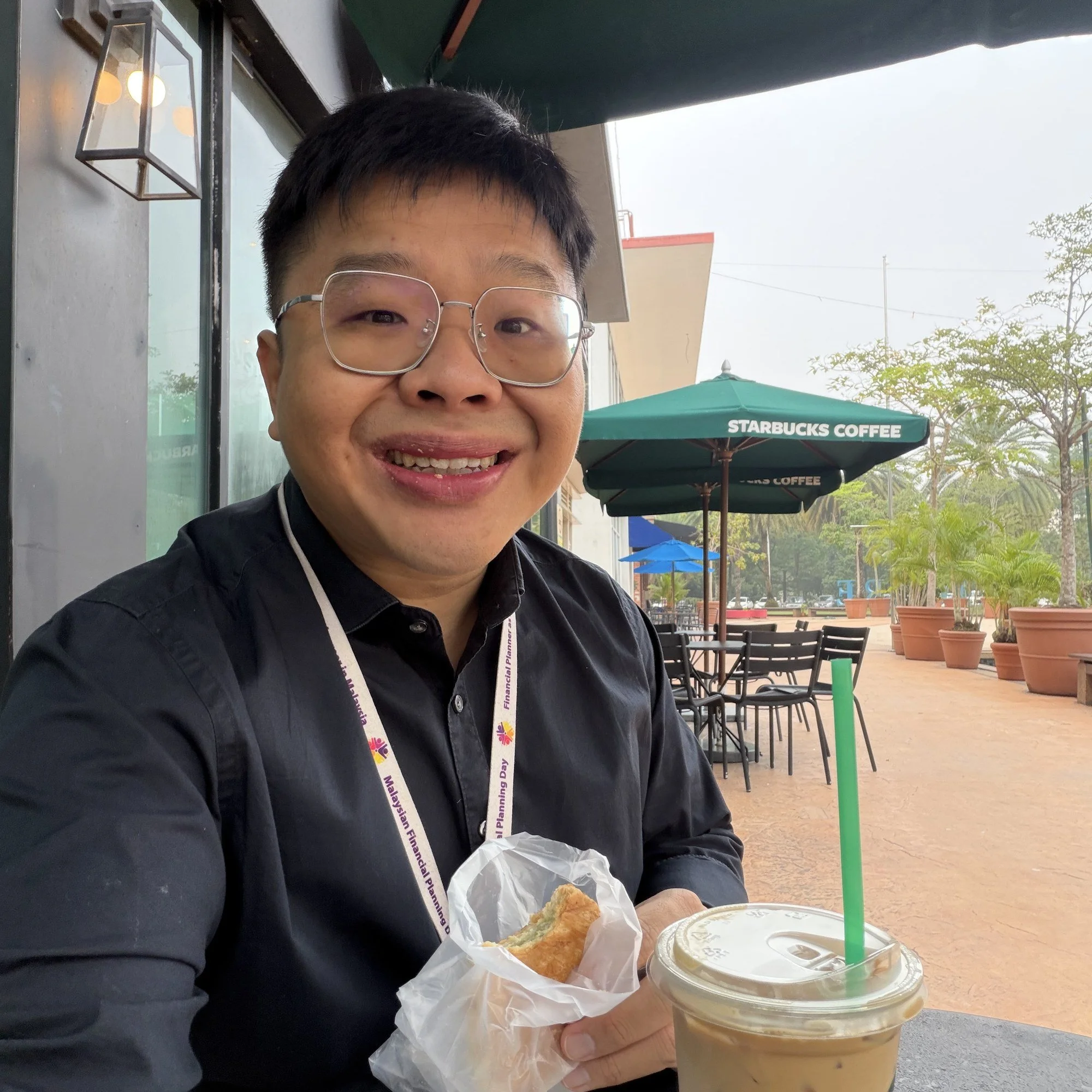
Kevin Neoh is a financial life coach based in Malaysia, a CFP professional and a Certified Financial Coach (CeFC, UK). Through his Life-First Money Guide approach, he helps people worry less about money and use what they have to support the life they want, today and tomorrow. He is also a husband and a father to a child on the autism spectrum.
This article is for general education only and is not personalised financial advice. Please think about your own circumstances, or speak with a qualified professional, before making financial decisions.